Discover a treasure trove of invaluable insights and shortcuts to maximize your proficiency with the HelpNDoc help authoring tool. Unearth hidden gems, streamline your workflow, and unlock the tool’s full potential as you delve into a collection of expert tips and tricks. From mastering advanced formatting techniques to harnessing time-saving features, this tag is your guide to becoming a HelpNDoc virtuoso. Elevate your documentation creation process, boost efficiency, and craft polished, professional help content with ease. Explore the Tips and Tricks section and embark on a journey to become a HelpNDoc maestro.

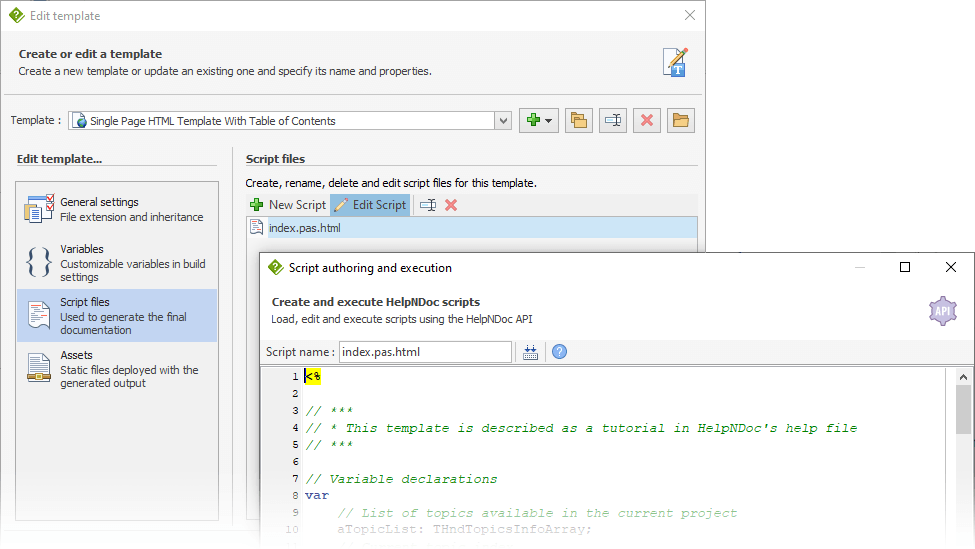
The recent release of HelpNDoc 6.4 includes an enhanced single page HTML template with the ability to optionally add a table of contents to the produced single page HTML documentation. We obviously used HelpNDoc's powerful template editor to modify the single page template and we thought it might be a good idea to document this process for learning purposes. Follow the steps described in this article to learn how you can create and alter HTML-based documentation templates using HelpNDoc's build-in tools.
Read More →
HelpNDoc 6.0 added support for topic status, which greatly simplifies the maintenance of documentation projects for technical authors: topics can be tagged as being "Out of Date", "In Progress", "Needs Review", "Complete" or any custom status you define. You might be tempted to leverage that feature to update an old project and change the status of all your topics to "Needs Review" to start reviewing them one by one. But individually updating every topics in a big project will be time consuming. Thankfully, HelpNDoc's scripting support can update the status of the whole documentation project in a fraction of a second. Let's see how this can be done.
Read More →
HelpNDoc includes a very powerful template processor where you can customize any part of the generated documentation. Most of the time, you'll use the default template of the documentation format you'd like to customize as a starting point. But when a new version of HelpNDoc is released, the default template might have evolved with new features and fixes, and you might want to include those changes in your custom templates. The solution is to compare and merge the updated default template with your own one. Let's see one way to painlessly and reliably achieve this task
Read More →
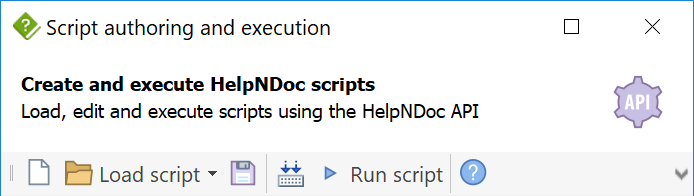
A standard help authoring tool such as HelpNDoc is a software where you generally write and organize content in order to produce documentation files for the end-user. As revisions are needed, the content needs to stay organized, and it usually involves a lot of laborious and error-prone tasks such as copying / pasting content all over the project, deleting content, moving and merging topics... Fortunately, HelpNDoc includes a powerful scripting processor which can help automate documentation creation, maintenance, reorganization... Let's see how we can leverage HelpNDoc's scripting capabilities to merge multiple children topics into a parent topic
Read More →
HelpNDoc is a leading user-friendly help authoring software that was designed to make technical writing easier. Over the years, the software has undergone several different development phases to make it more user-friendly, and with improved features, not only for technical writers but for authors as well. Presently, HelpNDoc is well known for its several different user-friendly features. Notably for its ability to generate several different file formats from just one source file including cross platform Qt Help files, Web-based HTML 5 documentations, standard Windows CHM help files, printable PDF and Word documents, ePub and Kindle eBooks as well as iPhone specific websites. But there's more! Here are five other key features of HelpNDoc that will make writing your next technical documentation easier;
Read More →
HelpNDoc's amazing responsive HTML web-site generation process can be customized to add a logo, tailored CSS and JavaScript code, translated strings and more... let's see how easy and fast it is to produce truly customized HTML documentation web-site using HelpNDoc
Read More →
Writing an online help file, a user manual, an eBook or any other format handled by HelpNDoc is usually lengthy ongoing and non-linear process. Oftentimes, as the content evolves, the overall topic hierarchy can become sub-optimal and a re-organization is required in order to make the documentation easier to read and navigate. Even though HelpNDoc provides tools to easily re-organize the table of contents, in some cases the process can be lengthy and error-prone, such as when an alphabetical sorting of topics is required. Thankfully, HelpNDoc includes scripts to automatically re-order topics by title. Let's see how rapidly and easily this can be done
Read More →
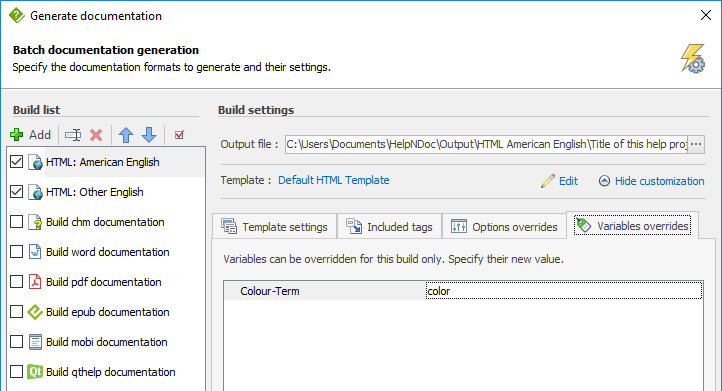
When producing a help file, a user manual or an eBook, it is not only important to provide translations based on the targeted audience, but also to use the proper terms based on the readers' languages. Let's take the "colour" term as an example: "color" is the preferred spelling in American English while "colour" is preferred in all other main varieties of English. As a technical writer, supporting multiple language variants can lead to complications and extra work to make sure that the whole documentation is error-free. Thankfully, the HelpNDoc help authoring tool makes this task trivial and fast thanks to variable placeholders and its powerful build system
Read More →
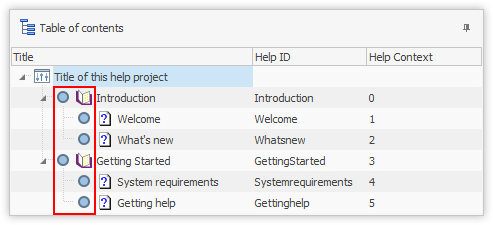
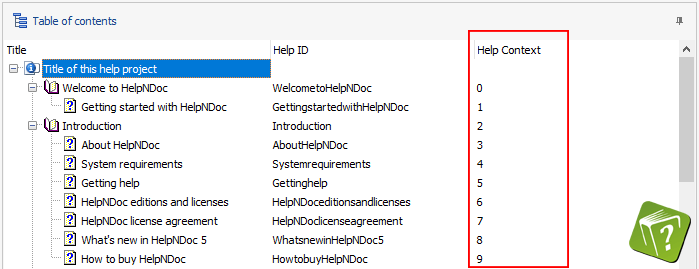
HelpNDoc includes a very powerful script editor with access to multiple API methods which provides a way to automate almost all parts of your documentation creation and maintenance process. We've already seen how to use HelpNDoc's scripting capabilities to automate help and documentation creation, update the path of your external media elements when they are moved and export Help IDs and Help Context numbers for your developers. Let's now see how we can create a handy script to automatically reset help context numbers for all topics in the documentation project
Read More →
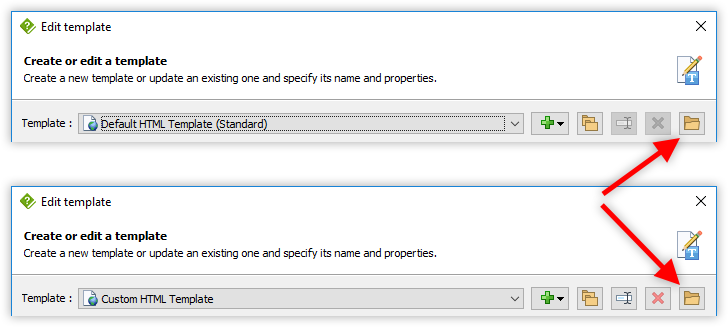
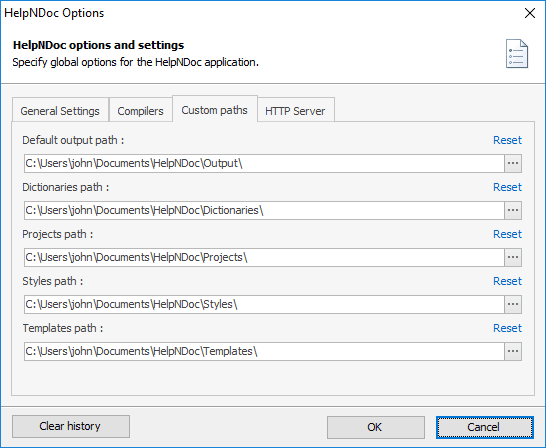
HelpNDoc is a powerful help authoring tool which can generate multiple documentation formats (including CHM, HTML, Word, PDF, ePub, Kindle, Qt Help) from a single source. It includes a very powerful template system, which provides a way to customize almost any part of the generated documentation's look and feel. Once a custom template has been created, it can be shared between multiple co-workers or backed up easily. Let's see how this can be done
Read More →